2.1. RISC-V Customization
2.1.1. ISA Customization
RISC-V is designed to be highly modular and customizable, allowing designers to create custom processor implementations tailored to specific applications and requirements. The modularity of RISC-V comes from its encoding scheme, which divides instructions into different groups and provides various optional extensions that can be added to the base ISA. RISC-V provides a “reserved” opcode space, which allows you to create custom instructions. Althougn you can use any opcodes, to avoid conflicts with future standard extensions, you should use the reserved custom opcode space to create your custom instructions.
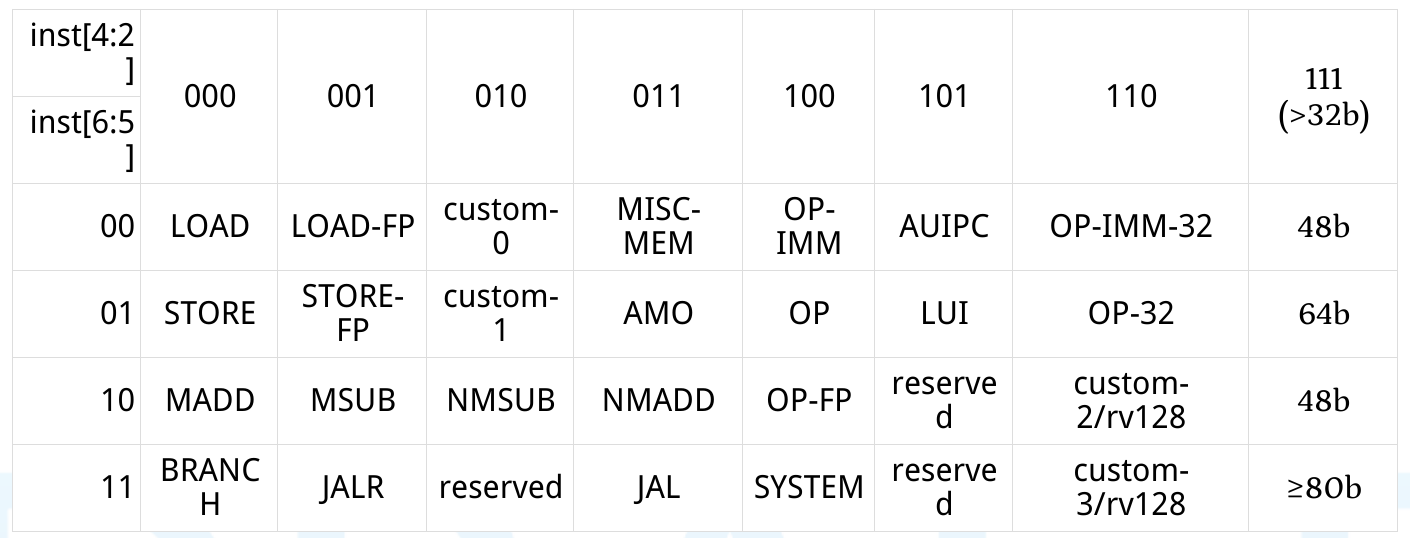
Fig. 2.1 Unprivileged ISA Specification, Table 35
From the Fig. 2.1, we can find that the reserved opcodes for custom instructions are:
custom-0:
0b000_1011,0x0bcustom-1:
0b010_1011,0x2bcustom-2:
0b101_1011,0x5bcustom-3:
0b111_1011,0x7b
Some projects have already used these custom opcodes, such as Rocket Chip. Rocket core provides a set of custom instructions, the Rocket Chip Coprocessor (ROCC) instruction extension, for accelerators.
The RoCC instructions follow a format similar to the R-type format, but the funct3 section is divided into three distinct functional fields.
 31      25 24  20 19  15 14  13  12  11  7 6    0
┌──────────┬──────┬──────┬───┬───┬───┬─────┬──────┐
│  funct7  │ rs2  │ rs1  │ xd│xs1│xs2│ rd  │opcode│
└──────────┴──────┴──────┴───┴───┴───┴─────┴──────┘
xdbit is used to indicate whether the instruction writes a destination register.xs1andxs2bits are used to indicate whether the instruction reads source registers.
In cases where an instruction does not use source and destination registers, the corresponding register index fields can encode other information, which deviates from the standard RISC-V R-type instruction format.
Here we provide the ROCC example to demonstrate that the format of a custom instruction is not restricted to the standard instruction format. As you create your own custom instruction, you have the freedom to define the format in any way you prefer. However, it is crucial to thoughtfully and reasonably plan each instruction bit. When assigning functionality to a bit, it is crucial to consider how it will impact the circuit and architecture.
2.1.2. CSR Customization
The specification also reserves a few CSR address spaces for custom purposes. You might find it useful to customize the CSR to store certain states.
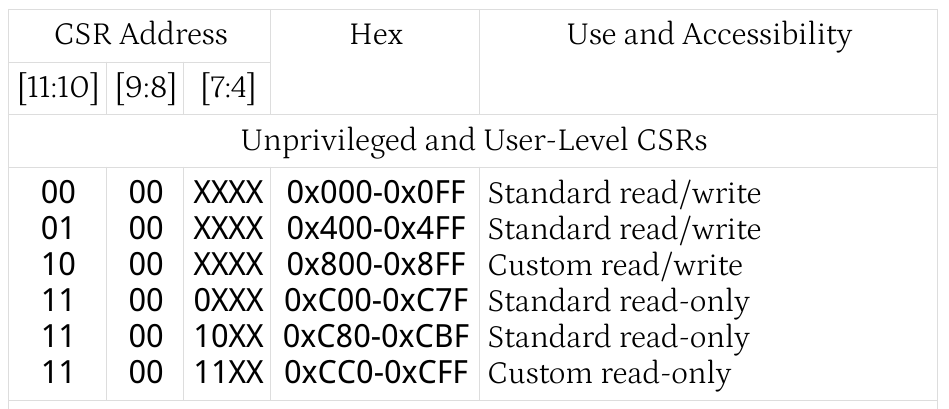
Fig. 2.2 Privileged ISA Specification, Table 3-4
Generally, the address of a CSR determines its permission and accessibility. The RISC-V ISA specification defines a CSR address mapping convention. For a CSR address (csr[11:0]), the top two bits (csr[11:10]) indicate if the register is read/write (00, 01, or 10) or read-only (11). The following two bits (csr[9:8]) encode the lowest privilege level that can access the CSR. Some designs may follow this convention, so if you extend custom CSRs on these designs, you should carefully choose the address of your new CSRs.
2.1.3. riscv-opcodes
The RISC-V community offers a helpful tool called riscv-opcodes that can generate opcode decoders for various purposes including documents, simulations, and circuits. We highly recommend that you utilize this tool to create the opcode decoder for your customized instructions. It’s important to note that if you choose to self-maintain your opcode, there may be unexpected bugs due to potential incompatible changes in the upstream specification.
The files named rv* in the root directory, as well as the unratified directory, maintain the format of each instruction.
To illustrate how to define an instruction, let’s take the addi instruction from rv_i as an example.
This is an I-type instruction with rd, rs1, and imm12 fields, and its opcode is 0x13.
Therefore, the definition of addi is as follows:
20sw     imm12hi rs1 rs2 imm12lo 14..12=2 6..2=0x08 1..0=3
21addi    rd rs1 imm12           14..12=0 6..2=0x04 1..0=3
22slti    rd rs1 imm12           14..12=2 6..2=0x04 1..0=3
As you can see, the definition is straightforward.
You can find more descriptions about the syntax in the official README.
Next, we move on to define our custom instruction.
First, RegVault has really different instruction formats from the standard RISC-V instruction formats. So, we need to define the new instruction fields for the range selection fields.
In order to implement RegVault, we require three 5-bit fields to indicate the indexes of the plaintext, tweak, and ciphertext registers. As RegVault is a 64-bit RISC-V instruction extension, we need two additional 3-bit fields to encode the starting byte and ending byte, respectively. Additionally, we plan to offer 8 key registers, so we also require 3 bits to encode the key register.
TODO:
  1. add new fields in arg_lut.csv
  2. define new instruction format
  3. define new csr in csrs.csv
After defining the new instruction format, we can generate the opcode decoder by running make.
The generated encoding.out.h file will contain the new instructions and CSRs.
TODO:
  list generated instruction and CSR macors